
This the first topic of the week in the Facebook group Seeking Waldorf Wisdom with Kim Allsup.
“To say something that is incorrect is not the worst thing that can happen, for the world itself will soon put one right about it; but it is really serious to regard a one-sided truth as the absolute truth and to persist in so regarding it. […] It is always essential to look at truths not only from the one side but also from the other. The fault of most philosophers is not that they say what is false — in many cases their assertions cannot be refuted because they do state truths — but that they make statements which are due to things having been viewed from one side only.”
Rudolf Steiner
“A wrong judgement can only be established if one looks at the vantage point from which the perception comes. One would come to terms with one another much better in the world of human viewpoints in many instances if this is always considered. One would then find that the variety of opinions in many cases only arises from the differences of points of view. Moreover, only through the diverse viewpoints can the essence of something be grasped. The mistakes made in this direction do not occur because people reach different opinions, but they arise when everyone holds his or her opinion to be the only correct and justified way to look at something.”
Rudolf Steiner
This week our theme is how we work together with students toward truth and beauty. This is a big topic that is relevant at all age levels. I hope we find our way to productive conversations about this theme. Please do join in this conversation!
This is a topic where the Waldorf approach is profoundly different from that used in schools that move children through narrow curricula and testing. In those schools, students are frequently judged according their ability to answer questions correctly. While Waldorf teachers, both in schools and homeschools, also help children learn the correct way of doing things, their methods of supporting such growth in a way that minimizes the child’s self-consciousness are part what makes Waldorf teaching remarkable.
In our attempts to artistically forge guidance and responses that help our students grow, we seek grounding in an understanding of each developmental age, each individual child and each situation. We don’t have a step by step method. Rather, we each develop our own art of teaching based on certain common understandings.
Re-reading the last few sentences, I see the potential to fall down the rabbit hole of vagueness. So, of course, since I’m a Waldorf teacher, I’ll tell a few stories that illustrate what I’m getting at.
***
Long ago, during my Waldorf internship in a first grade class, I watched incredulously as the teacher did not seem to notice mistakes and did not comment on them. I saw children making occasional letters and numbers that were backwards or ill formed. Sometimes, words copied from the blackboard were missing letters. But the teacher never said a thing to his students about these errors. I brought my questions about these mistakes to our weekly meeting and this experienced teacher offered wisdom that I carried with me into my own early grade teaching practice.
He told me that he was trying to avoid calling attention to mistakes until third grade. He did, however, notice the mistakes and had a strategy for making corrections. The day after he noticed a backward number in one student’s work, he might write that number on the board and ask the whole class to slowly and carefully write the number with him. Corrections always came the next day and did not include any reference to mistakes that had been made.
***
It is relatively easy to learn to, when possible, avoid corrections in the moment in the early grades, but it’s a challenge help the children learn to avoid correcting each other.
In the course of leading a class through retelling the previous day’s story, we often hear, “You forgot a part.” I asked the children to replace that phrase with, “I have a backtrack,” or, “I have a fill in.” These phrases are a way of helping children work together cooperatively without any appearance of criticizing each other. The emphasis is on creating something good together rather that than competing to be the one to get it right or do a better job.
In my classes the use the word “backtrack” and “fill in” continued as they moved up the grades as did a cooperative feeling as we summarized stories and lessons together.
***
I remember a parent evening in which I led parents through a typical grade two painting lesson. I painted and the parents followed, creating paintings that were similar yet each unique.
When the paintings were complete, I led them through the process of discussing their work an a way that avoided references to whether the artwork was good, bad, liked, disliked, skilled, unskilled. Instead, we noticed how it appeared as if the fog had covered one painting and how the sun shone brightly in another. We noticed that some paintings had many shades of green and others had many shades of blue. We saw hints that gnomes or fairies might be hiding in the background or that the entire painting seemed to glow. We worked on description instead of judgment, just as I was teaching children to do in class.
***
Overall, we want our students to move ahead with confidence, to avoid worrying about success and failure. We want them fully immersed in the feeling that they are becoming. We want them to have the sense that the little course corrections that they make are as natural as a the adjustments a sailor makes when keeping a true course. It’s not necessary for them to dwell on the feeling of being wrong as they search for what is right. And, we want them to learn to work together to find commonality and to seek the middle ground. As the examples above show, this is relatively easy in the early grades.
However, our adult world is burdened by a different sensibility. The polarities of success and failure, right and wrong, correct and incorrect and the thought that,”it’s my way or the highway,” are part of the black and white thinking that impairs politics and public discourse. It’s no wonder that some approaches to schooling in our era reflect the harshness of this type of thinking.
By the middle grades, and especially in middle school, children, even those in a Waldorf school, reflect their immersion in a culture where competition and polarity are assumed. At the same time, the older child’s own growing ability to think critically causes them to look judgmentally at their own work and at the creations of others. In a Waldorf school the wide range of offerings — handwork, art, music, movement, games, writing, projects, main lesson bookwork, main lesson discussions, woodwork and drama — bring a strong self-conferred sense of accomplishment. So much of each day is devoted to these activities that can’t be judged on a scale of one to ten, that give a student a sense of accomplishment without a externally awarded grade.
In third grade and beyond, the time comes when the teacher identifies mistakes. She corrects spelling, notes incorrect mathematical calculations and reminds young actors to work to learn their lines before the next rehearsal.
And yet, even at this age, the approach of Waldorf schools is one which minimizes self consciousness. No grades are given. Tests are rare. Mirrors are absent from bathrooms until, perhaps, middle school.
I put out these questions for discussion:
1) Do you agree with the idea that it is beneficial to avoid judgement in the early grades? How have you, as a school teacher or homeschool teacher, supported growth while providing a layer of protection from judgement and self consciousness in the early grades?
2) How can we develop class cultures in which, as the students grow older, the teacher’s corrections and guidance are respectful, gentle, helpful and taken in stride? Can you share approaches that have worked for you?
3) The subjects where right and wrong answers matter, for instance math and spelling, come with challenges not seen in other subjects. Most math classes, for instance, include some students who rarely make a mistake, many students who make a few mistakes that they fix easily and without embarrassment (“Oh, right, I forgot to carry the 2!”) and a few students who struggle. How can we protect those who struggle from the embarrassment that makes learning even harder for them and makes some of their time at school fraught with discomfort?
In addition to your thoughts about the questions above, please feel free to share observations and pose your own related questions. Over the course of the week I will open discussions in a few posts that are subcategories of or tangentially related to this thread. Feel free to do the same.
Note, if you are reading this on a Facebook page other than Seeking Waldorf Wisdom, and you want to join the conversation, you can comment on the page where it was shared, and/or post your comment on the page where this originated, Seeking Waldorf Wisdom with Kim Allsup. I encourage you to follow this Facebook page and join the conversation there.



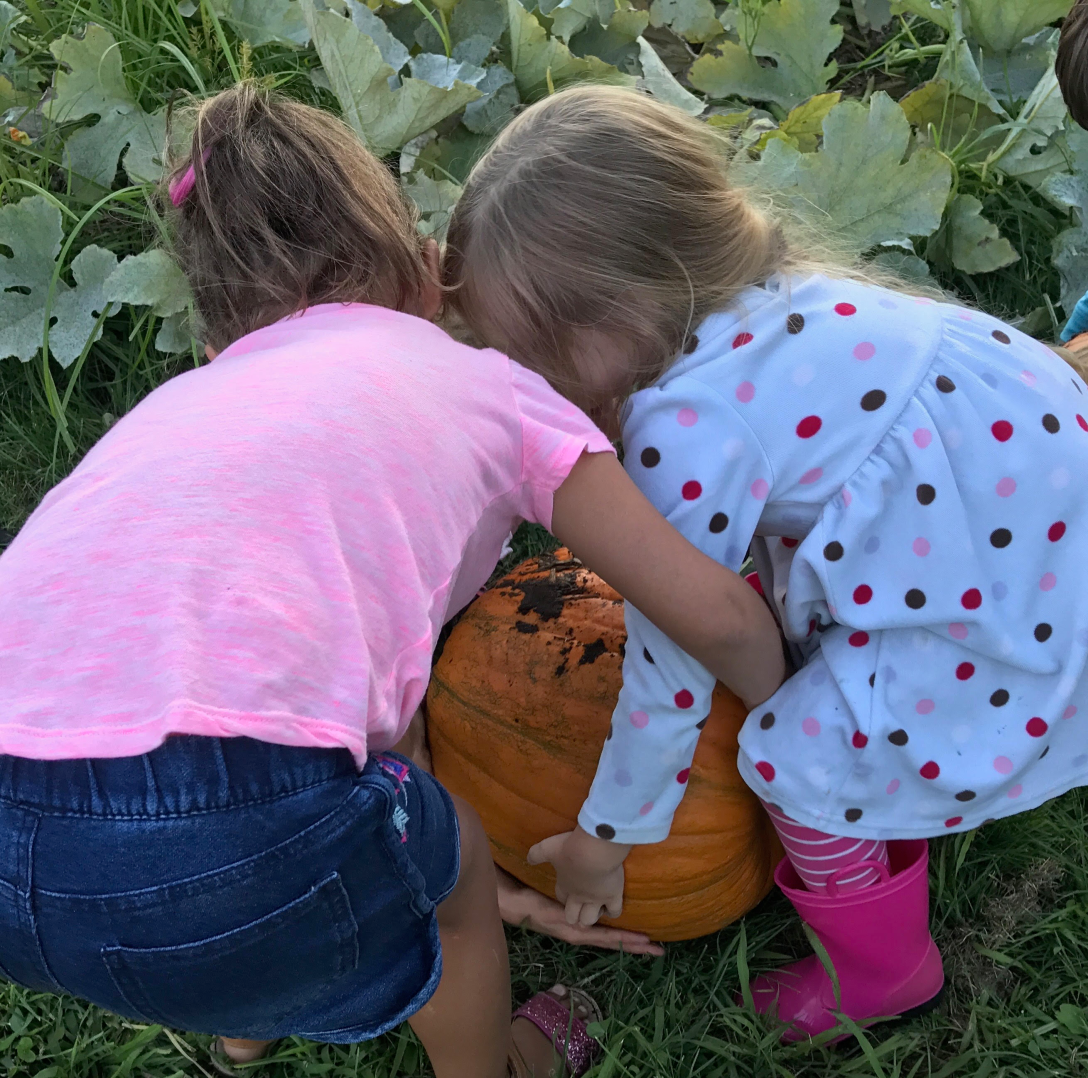

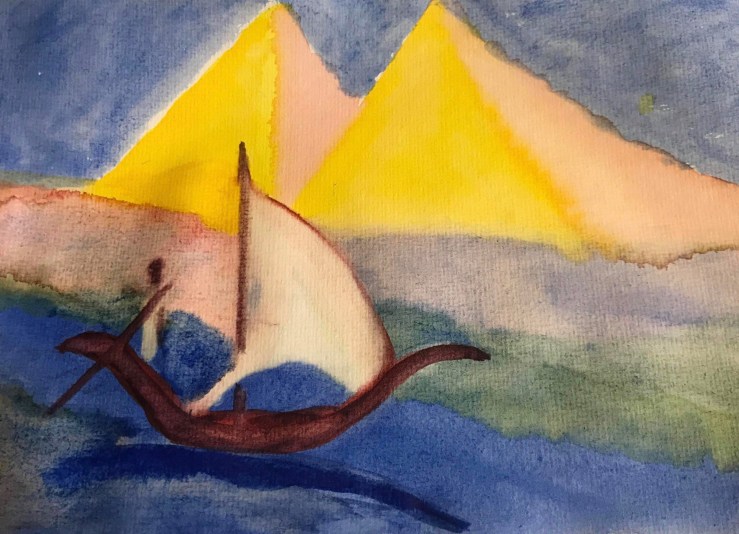
 Photo credit: another fine piece of art by Josephine Russo
 A member of this group suggested a conversation about looping, specifically looking at the considerations to take into account near the middle of the eight year journey when deciding whether to continue with a class. Let’s start with that question and add a couple of related questions that relate both to class teaching and to homeschooling.
 Seeking Waldorf Wisdom with Kim Allsup